Choosing Outdoor Sportswear for global markets requires more than comparing fabric prices or attractive product photos. Buyers must connect performance, comfort, compliance, and commercial value. A lightweight hiking jacket may work well in humid Southeast Asia but feel inadequate during a cold European spring. Regional weather, activity levels, body shapes, and consumer expectations can change the right product completely.
Start with the intended use. Trail runners need fast-drying fabrics, low weight, and secure pockets. Campers may value insulation, abrasion resistance, and adjustable hoods. Examine stitching around shoulders, pocket openings, and waistband areas. These points often reveal quality problems before field testing does. Ask suppliers for fabric composition, water-resistance results, colorfastness records, and size measurements. Independent testing can strengthen confidence, especially when products will enter several markets.
Compliance matters. Confirm labeling, fiber-content information, care instructions, chemical restrictions, and packaging requirements for each destination. Reliable suppliers should explain their testing process and provide traceable production details. Certifications may support credibility, but buyers should verify their scope and validity. A familiar logo is not proof by itself.
Fit is never universal. Use local wear trials with different body types and realistic movement. Test jackets while reaching, cycling, or carrying a backpack. Review samples in rain, sunlight, and repeated washing. No checklist is perfect. A fabric selected for softness may sacrifice durability, while a strong coating may reduce breathability. Global buyers should document these trade-offs instead of hiding them. Careful product reviews, transparent supplier communication, and evidence-based decisions help Outdoor Sportswear perform reliably across borders and seasons.
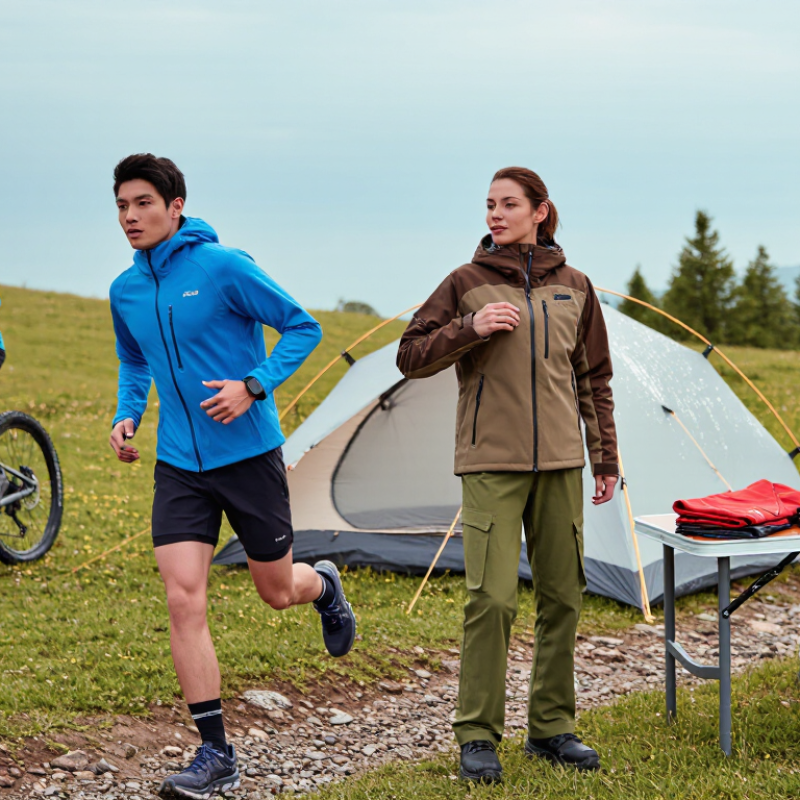
Global buyers should classify outdoor sportswear by activity, exposure, and movement. Categories should follow performance needs, not fashion alone.
Hiking usually needs abrasion-resistant trousers, breathable base layers, and reliable rain protection. Trail running demands lightweight stretch fabrics, rapid drying, and secure pockets.
Ski touring requires insulation, wind resistance, and freedom around the knees. Water sports need low water absorption, secure closures, and fast drying.
The Outdoor Industry Association’s 2024 Participation Trends Report recorded 175.8 million U.S. outdoor participants in 2023. This indicates broad demand, but customer requirements remain highly different.
A buyer serving humid tropical markets should prioritize ventilation and moisture management. A cold-climate buyer needs insulation, layering space, and usable cuffs. Fit comes first. Test garments with backpacks, gloves, helmets, or climbing harnesses. ISO 11092 can help assess thermal and water-vapor resistance, while EN 343 supports rainwear performance evaluation.
Material claims also require evidence. Textile Exchange’s 2024 Materials Market Report estimated global fiber production at 124 million tonnes in 2023.
Buyers should request fiber composition records, laboratory results, and chain-of-custody documents. Recycled content labels alone are not enough.
At 5°C with steady drizzle, a jacket may feel excellent during movement but cold during rest. At 30°C and high humidity, the same garment may trap heat. No specification is perfect. Field testing often reveals uncomfortable weaknesses that showroom reviews miss.
Check fabric construction, weight, stretch, drying speed, and surface durability. Fiber content alone proves little. A tightly woven shell may block wind better.
Review water resistance, waterproof ratings, sealed seams, adjustable hoods, and storm flaps. Inspect seam tape closely. Coatings may weaken after repeated washing.
Breathability helps release sweat during steep climbs or humid rides. Check moisture vapor data, but compare testing methods carefully. Numbers can mislead.
Rub samples against rough surfaces and wash them several times. Try them with base layers and gloves. Test real movement.
No. Tropical markets need quick drying and ventilation panels. Cold, wet regions need insulation beneath a protective outer shell.
Request chest, waist, hip, sleeve, and inseam measurements. Compare them with local customer data. Size labels are not enough.
Test climbing, cycling, and reaching movements. Check shoulder space, elbow comfort, zipper operation, and glove clearance. A narrow cuff can ruin a good jacket.
Use one technical sheet for every supplier. Include fabric, trims, packaging, inspections, duties, payment fees, and possible rework. A low quote may not be cheap.
Confirm freight control, duties, insurance, port charges, delays, and delivery responsibility. Match lead times with sailing schedules. Add a small buffer.
Check certificate scope, expiry dates, testing methods, and factory addresses. Confirm claims cover the finished garment. Attractive paperwork is not proof.
Choosing Outdoor Sportswear for global buyers starts with matching each product to its intended activity, climate, and performance demands. Hiking, running, cycling, skiing, and general outdoor use may require different levels of stretch, insulation, water resistance, wind protection, and ventilation. Buyers should assess fabric performance, moisture management, breathability, weather protection, and comfort. A practical layering system should include suitable base, mid, and outer layers, while accurate measurements, flexible fits, and a broad size range help meet the needs of diverse customers.
Quality and durability are equally important for long-term value. Buyers should review stitching, zippers, seams, fasteners, color stability, and resistance to repeated washing and outdoor wear. Safety requirements and relevant product certifications should be verified before purchase. When comparing suppliers, consider production capacity, quality-control procedures, minimum order quantities, pricing transparency, sample services, lead times, and international shipping terms. Clear communication and reliable documentation can reduce purchasing risks and support consistent product quality across global markets.

 Achieve