Choosing a Printed Sports Jersey for bulk orders is not only a branding decision. It is a practical investment in team identity, comfort, and production consistency.
A reliable supplier can reproduce the same logo, number, and color across hundreds of jerseys. That matters when players line up under bright stadium lights. It also reduces confusion during tournaments, school events, and company leagues. Quality printing should remain sharp after repeated washing, stretching, and outdoor use. Fabric weight, breathable panels, seam strength, and size accuracy deserve equal attention. A bold design means little if the jersey feels hot or tears at the shoulder.
Phil Knight, Nike co-founder, once said, “The product is the most important thing.” His point applies strongly here. A printed jersey should perform before it promotes. Experienced buyers usually request samples, inspect color matching, and test the print after washing. Small checks prevent large mistakes.
Bulk pricing can lower the cost per unit. However, cheaper is not always better. A rushed order may create uneven prints, late delivery, or uncomfortable sizing. That risk is easy to underestimate. Suppliers should provide clear artwork approval, production timelines, material details, and replacement policies. Those details build trust.
There is no perfect order. Teams may still misjudge sizes or choose a design that looks different on fabric. Careful planning makes those problems manageable. When appearance, durability, and service align, a Printed Sports Jersey becomes more than team clothing. It becomes a dependable part of the team experience.
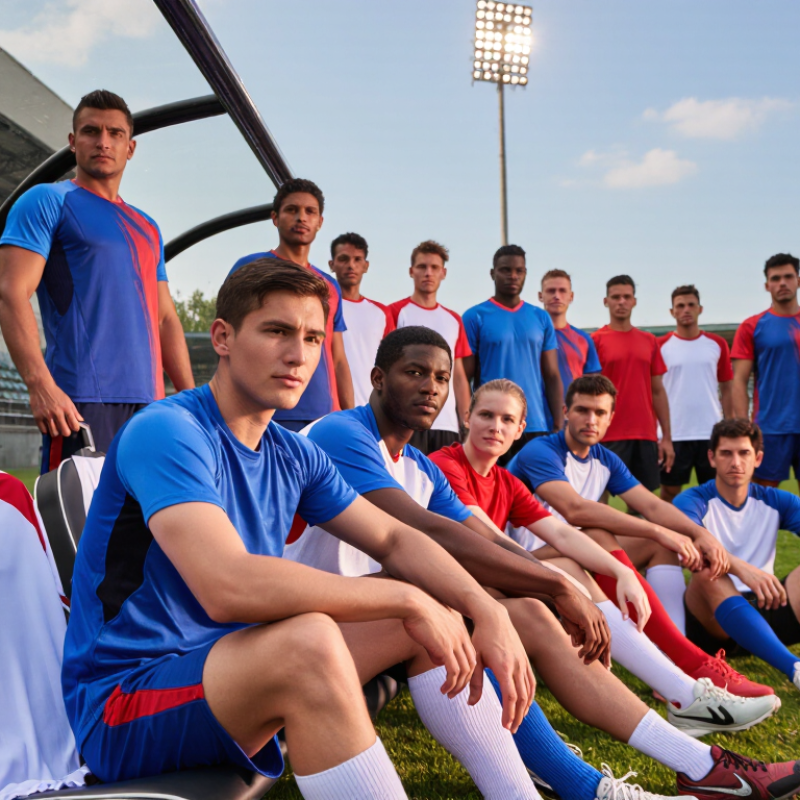
What Printed Sports Jerseys Are and How They Support Team Identity
Why Choose Printed Sports Jersey for Bulk Orders?
Printed sports jerseys are athletic shirts customized with team colors, player names, numbers, and graphic details. Designs may be applied through sublimation, heat transfer, or screen printing. Each method affects texture, durability, color depth, and production cost. This matters for bulk orders.
Team identity becomes visible on the field. Matching colors help players feel connected before the game begins. Clear numbers also help coaches, officials, and spectators identify athletes quickly. A consistent jersey design can make a school, club, or community team appear more organized. Reliable suppliers usually confirm artwork, sizing, fabric, and print placement before production. A printed sample can reveal problems early.
Details matter greatly. A name placed too low may rub against equipment. Thin lettering may lose clarity after repeated washing. Bright colors may look different under indoor lighting. Not every design works.
Bulk ordering supports consistency, but it can also expose small mistakes across dozens of jerseys. Teams should review a size chart instead of guessing from ordinary clothing. Breathable polyester, reinforced seams, and colorfast printing are practical choices for regular training. Care instructions should be shared with every player. Even then, preferences differ, and one cut may not suit every body type. That limitation deserves honest attention.
Why Choose Printed Sports Jerseys for Bulk Orders?
What printed sports jerseys are and how they support team identity
Printed sports jerseys combine team colors, names, numbers, and graphics on one coordinated garment.
The planning scores below use a five-point practical scale to compare the main benefits teams typically consider
when ordering customized jerseys in bulk. Consistent visual elements help players look unified, improve recognition,
and create a stronger sense of team belonging.
How Custom Printing Options Meet Different Team Requirements
Bulk sports jersey orders succeed when printing matches the team’s real demands. A school may need 80 numbered shirts, while a weekend club may request mixed names, sizes, and late additions. Screen printing suits large runs with repeated graphics and strong color coverage. Heat-transfer printing handles individual names and numbers more flexibly. Sublimation works well for lightweight polyester jerseys because the design becomes part of the fabric.
The numbers support this shift toward customization. Grand View Research valued the global custom T-shirt printing market at about $4.31 billion in 2022. It also projects an 11.1% compound annual growth rate from 2023 to 2030. This category is broader than sportswear, but it signals rising demand for personalized apparel. Mordor Intelligence reports that the digital textile printing market continues expanding through short runs and on-demand production. That matters for teams avoiding excess inventory.
I have found that artwork checks prevent more problems than attractive samples. Confirm logo dimensions, color references, player lists, and fabric composition before production. No method is perfect. Sublimation can appear less vivid on dark fabrics, while some transfers may crack after poor washing. A pre-production jersey reveals uncomfortable collars, weak contrast, or numbers placed too close to seams. That extra check may delay approval slightly. It can also protect an entire bulk order from becoming an expensive lesson.
Why Choose Printed Sports Jersey for Bulk Orders? - How Custom Printing Options Meet Different Team Requirements
Comparison of common customization methods for bulk team sports jersey orders. Performance and cost ranges are typical industry estimates and may vary by supplier, garment fabric, artwork, and order quantity.
| Customization Method |
Best Match for Team Requirements |
Design Capability |
Typical Durability |
Bulk-Order Advantage |
Main Consideration |
| Screen Printing |
Large orders with simple team names, numbers, and limited-color artwork |
Strong solid colors; less efficient for photographic images and many-color gradients |
Good when properly cured and washed according to garment-care instructions |
Setup costs are spread across more garments, making unit pricing more competitive at higher volumes |
Each additional color may require a separate screen and setup |
| Dye Sublimation |
All-over team designs, gradients, multiple colors, and lightweight polyester performance jerseys |
Supports complex graphics, repeating patterns, gradients, and full-surface coverage |
The design becomes part of the polyester fibers, so it generally does not crack or peel like a surface film |
Every jersey can include individualized names, numbers, and graphics within one coordinated design |
Works best on polyester or polyester-rich fabrics; color appearance depends on the fabric and production profile |
| Heat Transfer Vinyl |
Small to medium batches, player-specific names and numbers, or designs requiring special finishes |
Suitable for bold lettering, numbers, and selected reflective, metallic, or textured effects |
Good with correct application and care; edges may lift over time if exposed to excessive heat or abrasion |
Practical for late roster changes and small quantities because artwork setup is relatively simple |
Large, layered, or highly detailed graphics can increase production time and material use |
| Direct-to-Film Transfer |
Small to medium bulk orders needing detailed, full-color logos on polyester or blended fabrics |
Handles fine details, gradients, and full-color artwork without requiring a separate screen for each color |
Generally flexible and durable when heat-pressed correctly; performance varies with film and washing conditions |
Useful when teams need different names, numbers, or logo variations across one order |
The printed layer remains on the fabric surface and may feel heavier than dye sublimation |
| Embroidery |
Small chest badges, club-style emblems, staff apparel, and heavier outerwear |
Creates a raised, textured appearance; very small text and complex gradients are less suitable |
Highly durable on compatible garments when stitch density and backing are properly selected |
Provides a premium-looking emblem that can be standardized across a team order |
Adds weight and stiffness, so it is usually not ideal for large areas on lightweight performance jerseys |
| Team Requirement |
Recommended Jersey Specification |
Reason for the Recommendation |
Important Bulk-Order Check |
| Consistent appearance across many sizes |
Standardized artwork, color references, placement guides, and a pre-production sample |
A documented specification reduces variation between garments and repeat orders |
Confirm size grading, print position, color approval, and tolerance for placement differences |
| Player-specific names and numbers |
Dye sublimation, direct-to-film transfer, or heat transfer vinyl |
These methods support variable information without creating a completely new garment design for every player |
Use a verified roster and check spelling, number duplication, font, and character limits before production |
| Frequent washing and intensive training |
Moisture-managing polyester with dye sublimation or a properly cured transfer |
Polyester performance fabrics dry quickly, while embedded or well-bonded graphics can reduce peeling concerns |
Request wash-care instructions and test one sample through the intended cleaning routine |
| Complex, colorful, or all-over artwork |
Dye sublimation on suitable polyester fabric |
The process accommodates detailed graphics, gradients, and broad coverage more efficiently than limited-color methods |
Review a physical color sample because screens and printed fabric can display colors differently |
| Tight budget for a high-volume order |
A simple design using screen printing or another method suited to the artwork |
Simpler artwork and larger quantities can reduce setup cost per garment |
Compare the complete landed cost, including garment, decoration, setup, sample, packaging, and shipping |
| Late roster changes or replacement jerseys |
Heat transfer vinyl or direct-to-film transfer for individual pieces |
These methods are flexible for small quantities and variable names or numbers |
Confirm whether replacement garments can match the original fabric, color, font, and placement |
Factors to Evaluate Before Placing a Bulk Jersey Order
Why Choose Printed Sports Jersey for Bulk Orders?
Factors to Evaluate Before Placing a Bulk Jersey Order
Printed sports jerseys can create a unified team appearance without complex stitching. Before ordering in quantity, check the fabric, printing method, size range, and production schedule. Polyester blends often suit active use because they dry quickly and hold shape. Ask for a physical sample, not only a digital image. A screen preview may show colors inaccurately. We learned this after a bright blue design arrived slightly dull.
Test the sample after washing, stretching, and repeated movement. Check whether the numbers crack, peel, or bleed onto pale fabric. Review the size chart with actual chest and length measurements. A small sizing error can affect dozens of players. Confirm the artwork file, placement, font thickness, and color references in writing. Thin details may disappear on textured fabric. Keep the design practical.
Quantity affects more than price. Ask about minimum order requirements, extra pieces, replacement policies, packaging, and delivery dates. Leave room for late size changes. That part is easy to underestimate. A reliable supplier should explain production stages clearly and provide a pre-production proof. Request consistent measurements across all sizes, including sleeve openings and collar width. Compare the final sample with the approved artwork before full production begins. Cheap jerseys can become expensive when reprints, missed games, or uneven quality enter the calculation.
The Bulk Ordering Process from Design Approval to Delivery
Bulk printed sports jerseys require more than attractive artwork. They need a controlled ordering process from design approval to delivery. Before production, the team confirms quantities, sizes, fabric type, printing method, colors, and player details. A digital proof shows placement and scale. It should be checked carefully.
Design approval is a practical checkpoint.
Names, numbers, logos, and sponsor spaces must match the approved file. Experienced production teams also review color limits and fine lines before printing. These details can affect durability and appearance. One overlooked number can create costly rework. It happens.
After approval, a sample jersey or printed panel helps confirm the final result. The buyer can inspect stitching, color consistency, breathability, and print adhesion. For larger orders, suppliers should record measurements and maintain a production sheet. Quality checks should happen during printing, not only at the end. Random inspection is useful, but it cannot replace full quantity control.
Packing follows the approved size breakdown.
Each carton should show quantities and sizes clearly. Delivery planning includes production time, inspection time, and shipping space. A realistic schedule is safer than a rushed promise. Delays may occur when artwork changes late or size data is incomplete. Clear communication reduces these risks. Still, the process is not flawless. A practical supplier reports problems early, suggests workable adjustments, and keeps approval records until the jerseys arrive.
Conclusion
Printed Sports Jersey orders offer teams a practical way to build a consistent and recognizable identity. By adding team colors, logos, names, numbers, and other design details, customized jerseys help players feel connected while making the team easier to identify during matches and events. Ordering in bulk can also provide better cost efficiency, consistent quality, and matching apparel for players, coaches, and staff.
Before placing an order, teams should evaluate fabric comfort, sizing options, printing durability, color accuracy, minimum quantities, and production timelines. Different printing methods can support various design requirements, from simple numbers to detailed graphics, so the artwork should be reviewed carefully before approval. A successful bulk ordering process usually includes confirming specifications, submitting and approving the design, checking sizes and quantities, completing production, and arranging delivery. Clear communication at every stage helps reduce errors and ensures the final jerseys meet the team’s expectations.

 Achieve