Sublimation Sportswear gives brands a way to place detailed graphics directly into polyester fabric. Color becomes part of the fibers, rather than sitting as a thick layer on top. The result can feel smooth against the skin, even across a bold team pattern or a finely printed sponsor mark. It also supports consistent designs across jerseys, shorts, and warm-up tops. That matters when a team needs a coordinated look.
A useful principle from fictional composite apparel specialist Jordan Lee is: “Choose sublimation when the design should move with the fabric, not sit above it.” This is an illustrative quote, not a published expert statement. In practice, the method can suit lightweight polyester garments and repeat orders where color consistency matters. It also allows designers to test gradients, names, and complex layouts without adding separate printed panels. Small details show. So do mistakes.
The choice still depends on the product. Sublimation is generally best suited to polyester, and the final result depends on fabric quality, artwork preparation, and production control. A vivid screen preview does not guarantee an exact match on cloth. That is worth remembering. Brands should request samples, inspect seams and color areas, and test garments during movement and washing. Sublimation Sportswear can support a distinctive, unified range, but it cannot rescue weak fit or poor materials. The strongest case is practical: clear design, suitable fabric, and careful quality checks.
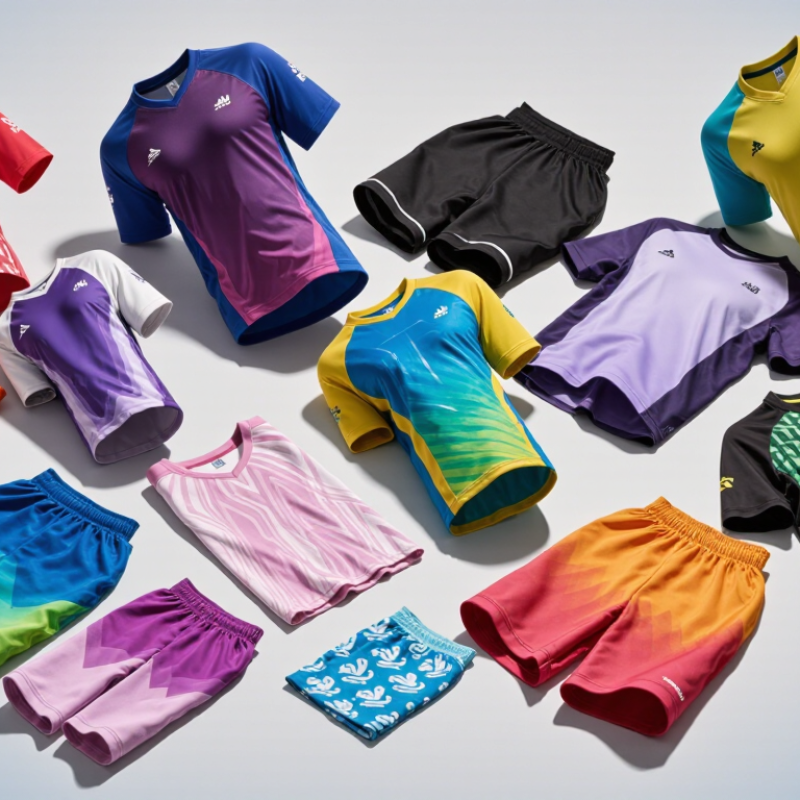
What Sublimation Sportswear Is: Disperse Dye Transfer at 180–210°C
Why Choose Sublimation Sportswear for Your Brand?
Sublimation sportswear uses disperse dyes transferred by heat onto polyester fabric. At roughly 180–210°C, the printed dye turns into vapor and moves into the fibers under pressure. It becomes part of the material, rather than sitting on its surface like a separate layer. The exact temperature, time, and pressure depend on the fabric and equipment, so the stated range is a starting point, not a universal recipe.
The result can support detailed graphics, sharp color transitions, and designs that cover a whole jersey. Since there is no thick printed film, the fabric’s original feel and airflow are less likely to be changed by the decoration. That matters during movement. Still, sublimation works best on suitable polyester; it is not a reliable choice for every fiber or dark garment. Color can also shift with fabric, ink, and press settings.
A white polyester panel is useful for checking the result before a full run. Look closely at small text, seams, and areas where colors meet. A test panel can still surprise you. That is worth remembering. Careful sampling helps spot uneven transfer or unexpected shades, while realistic expectations help teams choose designs that suit both the fabric and how athletes will wear it.
Why Choose Sublimation Sportswear for Your Brand?
What sublimation sportswear is: disperse dye transfer at 180–210°C.
The chart shows the stated transfer temperature range. Actual press settings can vary with the ink, fabric, equipment, and pressing time.
How Polyester Content and White Fabric Affect Sublimation Color
Sublimation sportswear depends on more than a bright design. Heat turns sublimation ink into gas, allowing the dye to color polyester fibers. Higher polyester content usually produces stronger, clearer color. A fabric with substantial cotton may look softer or faded because cotton does not hold sublimation dye in the same way. White matters.
White polyester gives the printed colors a clean starting point. On a colored garment, the fabric shade can show through and shift the final result; sublimation does not add an opaque white layer. A vivid blue, for example, may look duller on pale gray fabric. Small differences in fabric texture also matter. A smooth knit can show fine details more evenly, while a textured surface may make thin lines appear less crisp.
Check the fiber label, then print a swatch on the actual fabric before producing a full run. Compare it under ordinary indoor light, not only on a bright monitor. Temperature, pressure, and pressing time can affect the result, so follow the equipment guidance and test adjustments carefully. Even then, a sample can surprise you. I have found that expected color matches are not always exact, and that is worth planning for.
How ISO 105-C06 Tests Sportswear Colorfastness to Washing
Why Choose Sublimation Sportswear for Your Brand?
How ISO 105-C06 Tests Sportswear Colorfastness to Washing
Sublimation prints can deliver vivid graphics on polyester sportswear, but color needs to withstand repeated washing. The Textile Exchange Materials Market Report 2024 estimates global fiber production reached 124 million tonnes in 2023, with polyester making up about 57%. That scale makes reliable testing especially relevant to performance apparel. ISO 105-C06 evaluates color change and staining after controlled washing. The test uses specified conditions, including detergent, temperature, and duration. Small details matter.
A laboratory places a dyed specimen beside adjacent fabric, then assesses both against grey scales for color change and staining. The exact procedure depends on the selected ISO test method; results should be reported with that method, not just as “passed.” For sublimated garments, test the finished fabric, since heat settings, polyester construction, and finishing treatments can affect performance. A bright sample before washing proves little. Check the print after the test, and inspect pale companion fabric for transferred color. ISO results support comparison under defined conditions, but they cannot reproduce every home washer, detergent, or drying habit. Honestly, that gap is easy to overlook.
Why Choose Sublimation Sportswear for Your Brand? - How ISO 105-C06 Tests Sportswear Colorfastness to Washing
| Data Dimension |
Standard-Based Information |
Relevance to Sublimation Sportswear |
| Test standard |
ISO 105-C06 specifies methods for assessing the colorfastness of textiles to domestic and commercial laundering under defined test conditions. |
It provides a standardized way to assess how a dyed or printed fabric responds to washing; it does not, by itself, certify a garment or establish a universal pass level. |
| Test conditions |
The applicable procedure sets conditions such as wash temperature, duration, detergent, and mechanical action. The procedure is selected according to the test purpose and relevant product requirements. |
Use conditions that reflect the intended care instructions and buyer requirements. A test result is meaningful only when its method and conditions are reported. |
| Color change assessment |
Color change is evaluated using the grey scale for assessing change in color, referenced in ISO 105-A02. |
This assessment indicates whether the garment’s color appearance changed after the specified laundering procedure. |
| Staining assessment |
Staining of adjacent fabric is evaluated using the grey scale for assessing staining, referenced in ISO 105-A03. |
It helps identify whether color has transferred from the test specimen to adjacent material during washing. |
| Grey-scale rating |
The grey scales use grades from 1 to 5: grade 5 represents no or negligible change or staining, while grade 1 represents severe change or staining. Intermediate grades indicate increasing degrees between these endpoints. |
Report color-change and staining grades separately. Any required minimum grade should be agreed in the product specification; ISO 105-C06 does not set one universal acceptance threshold. |
| Why sublimation is used |
In polyester sublimation printing, heat transfers disperse dye into polyester fibers. The method is commonly used for vivid, detailed designs on suitable polyester fabrics. |
Wash performance still depends on factors such as fabric composition, dye selection, processing, and test conditions. It should be verified on the finished material rather than assumed from the printing method alone. |
| Recommended test report details |
Record the ISO 105-C06 procedure used, test conditions, specimen details, color-change grade, staining grade, and any deviations from the selected method. |
Complete reporting makes results easier to compare with care-label needs and agreed purchasing requirements. |
Note: The information above describes the standard’s assessment framework, not test results for a specific fabric or garment. Actual performance should be determined by testing representative finished samples.
How ISO 105-X12 Measures Colorfastness to Rubbing
ISO 105-X12 measures how much color transfers from a fabric when it is rubbed against another surface. A rubbing tester moves a small white cotton cloth across the sample under controlled conditions. The test is performed dry and, when relevant, with a damp cloth. The cotton is then compared with a staining scale, where a higher grade indicates less visible transfer.
For sublimated sportswear, this check matters at seams, printed panels, and areas that brush against equipment. Sublimation places dye within polyester fibers, but that does not make every fabric immune to rubbing. Fabric construction, finishing, moisture, and production settings can all affect results. Small details count.
A test report should state whether the sample was tested dry or wet, since the two results can differ. It should also identify the tested fabric and its color. A passing grade is useful, but it is not a promise that a garment will never show wear in daily use. That distinction is easy to miss. ISO 105-X12 offers a repeatable comparison, not a full simulation of every match, wash, or training session. Brands can use the findings to review material choices and investigate unexpected transfer before production scales up.
How Print Durability and Design Flexibility Shape Brand Production Choices
Sublimation suits sportswear because heat turns the printed dye into gas, which bonds with polyester fibers. The result keeps the fabric’s surface smooth, rather than adding a raised layer that may affect stretch. In a running jersey, fine gradients, small numbers, and edge-to-edge patterns can appear on one panel. Textile Exchange’s Materials Market Report 2024 says polyester made up 57% of global fiber production in 2023, reflecting its broad role in apparel. Still, it is not magic. Sublimation works best on light-colored polyester; cotton and dark fabrics need different print methods.
Durability depends on more than the print method. Correct temperature, pressure, fabric preparation, and wash care all matter. Poor process control can leave uneven color or blurred details. Grand View Research valued the digital textile printing market at $2.7 billion in 2022 and forecast 12.7% annual growth from 2023 to 2030. That projection points to continued investment in digitally printed textiles, though it does not guarantee better results for every production run. For a brand team, the practical choice is to test a finished garment: stretch it, inspect the seams, and wash it repeatedly. A small test batch may feel slower. It can reveal flaws before a full production order.
Conclusion
Sublimation Sportswear is created by transferring disperse dyes from printed paper into polyester fabric using heat, typically at 180–210°C. The dye bonds within the fibers, allowing designs to become part of the material rather than forming a separate surface layer. Because the process works best with polyester and a light, often white, base fabric, fiber content and fabric color strongly influence the final brightness and accuracy of printed colors.
For production decisions, brands can assess colorfastness using ISO 105-C06 for resistance to washing and ISO 105-X12 for resistance to rubbing. These tests help indicate how well colors withstand everyday care and friction, though results depend on materials and process conditions. Sublimation also supports detailed, flexible designs across garments, making it useful for varied teamwear and activewear production. Considering print durability, fabric choice, testing results, and design requirements together can help determine whether sublimation is the right approach.

 Achieve